
How PTCL is Diagnosed
How PTCL is Diagnosed
The Components of a Biopsy
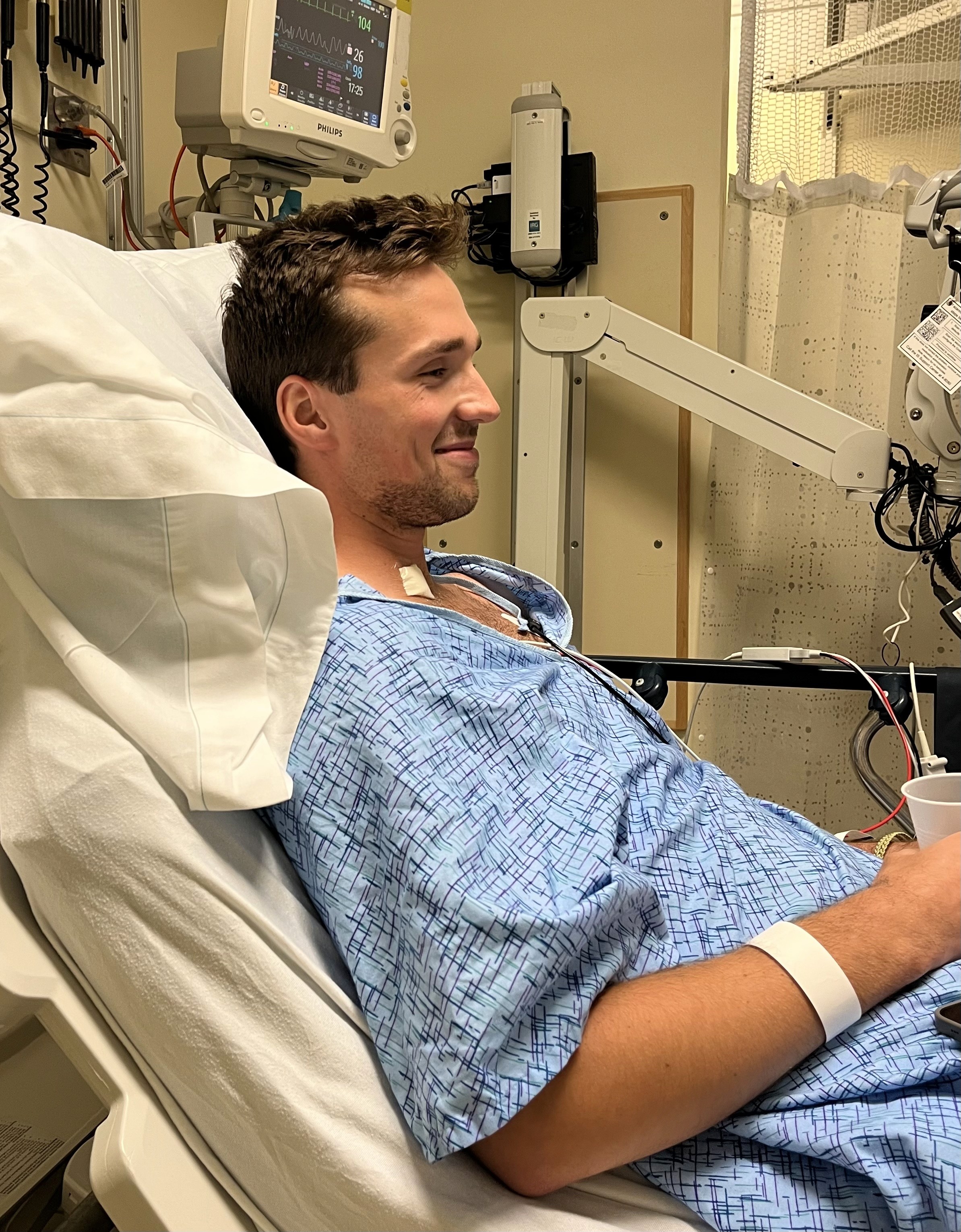
The first and most important step in diagnosing peripheral T-cell lymphoma (PTCL) is getting a biopsy. A biopsy means removing a sample of tissue for a pathologist, a doctor who specializes in examining cells under the microscope, to study.
How the biopsy is done
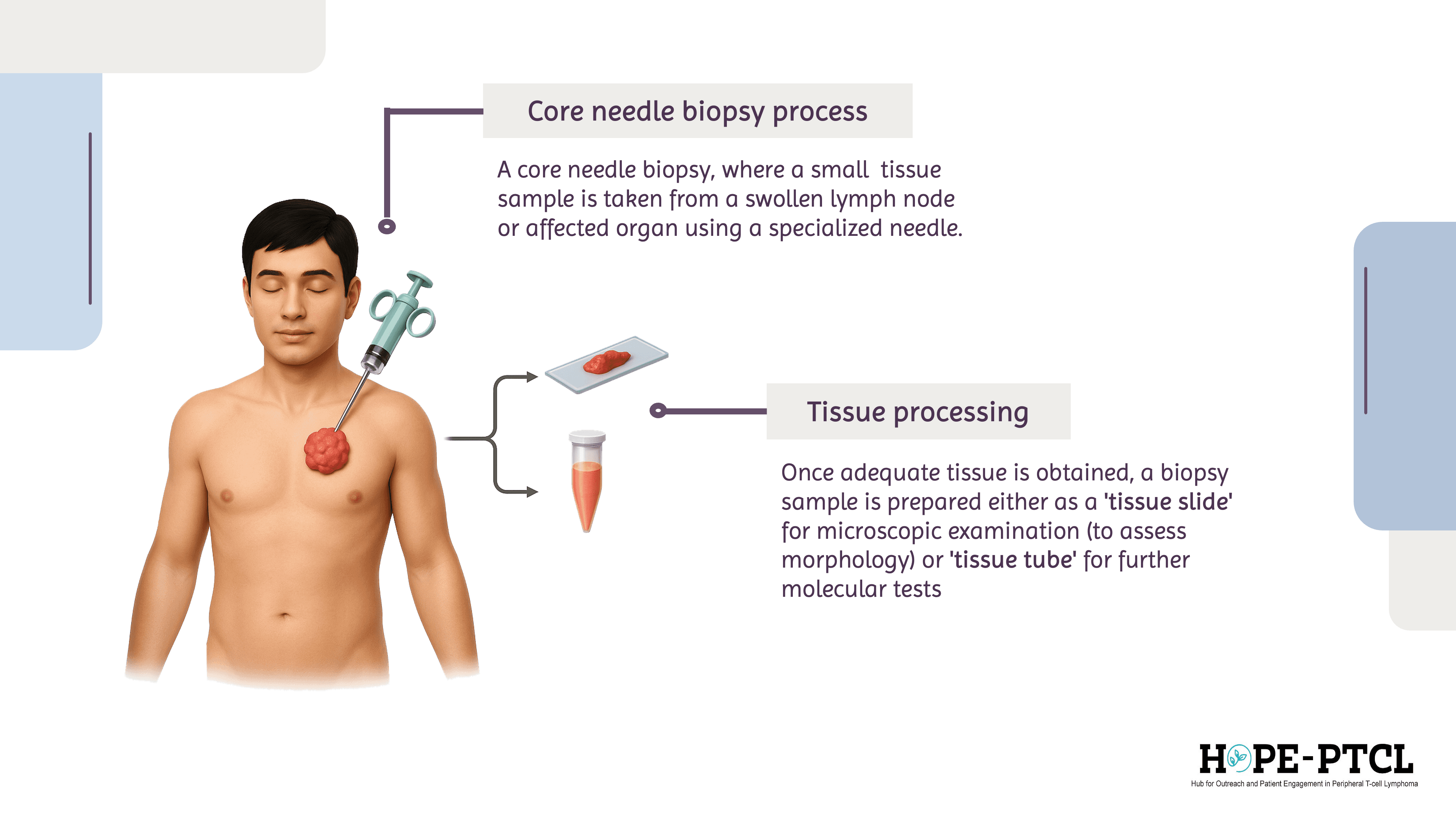
Whenever possible, doctors prefer to remove an entire lymph node in a procedure called an excisional biopsy, since this provides the most complete information. If removing the whole node isn’t possible, they may take a portion of the lymph node instead or a small core of tissue using a special needle; this is known as an incisional or core needle biopsy. In cases where lymphoma is suspected in the skin or another organ, the biopsy is taken directly from that area.
What happens to the Biopsy Samples
What happens to the
Biopsy Samples
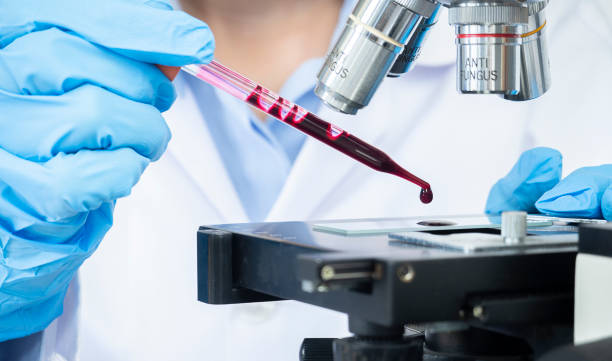
Once collected, the tissue goes to the pathology lab. Because diagnosing PTCL can be challenging, several different tests are often performed:
Microscopic examination
Microscopic examination
The pathologist looks at how the
cells are arranged and whether
they look abnormal under the
microscope.
Key systemic and localized signs may signal
relapsed/refractory disease, including unexplained fevers,
weight loss, new lymphadenopathy, or organ-related
discomfort.
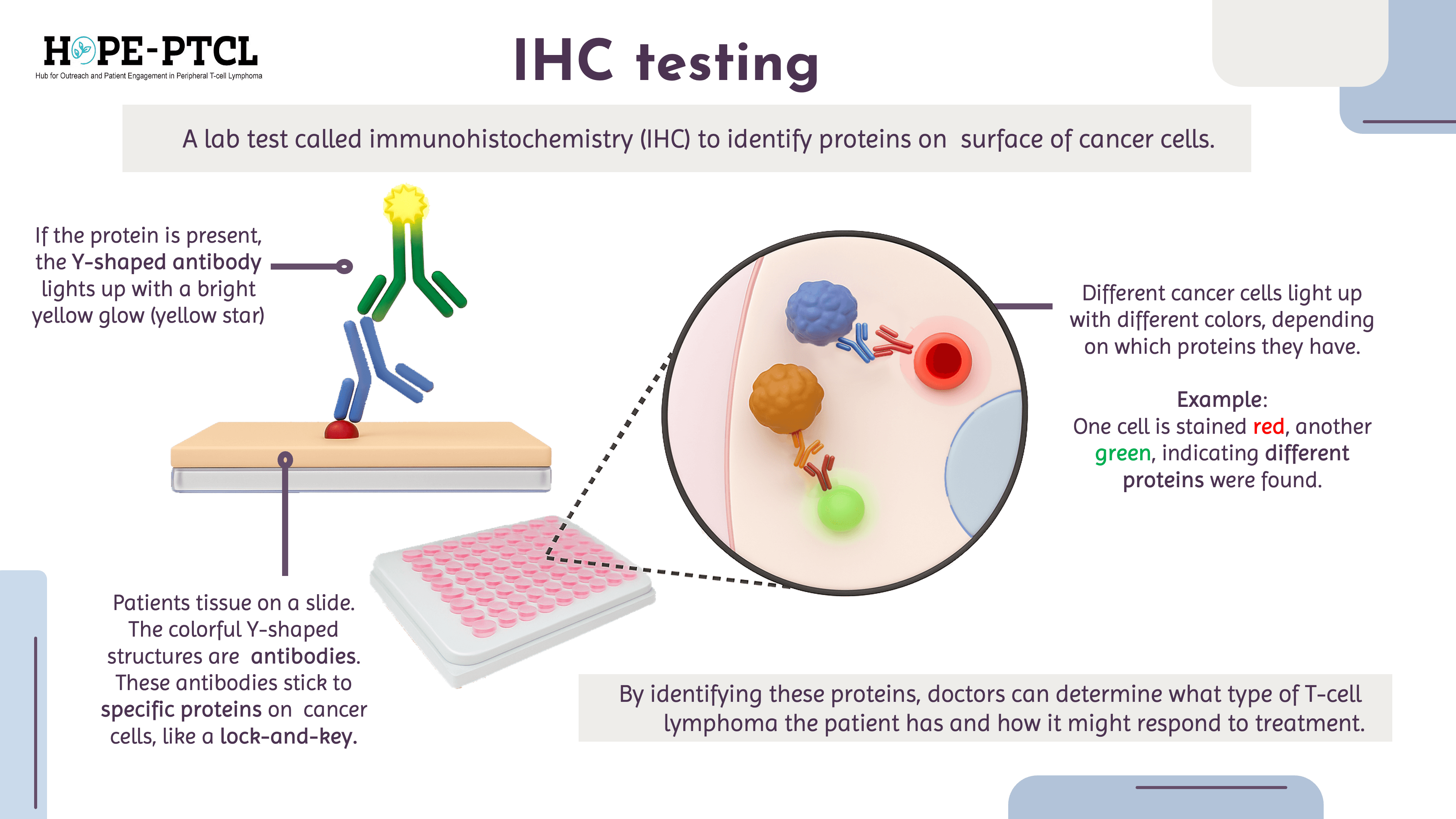
Immunohistochemistry (IHC)
Immunohistochemistry (IHC)
A test that uses special stains to
help identify proteins on the cell
surface, which can show
whether the lymphoma is a T-cell
lymphoma and which subtype it
may be.
Key systemic and localized signs may signal
relapsed/refractory disease, including unexplained fevers,
weight loss, new lymphadenopathy, or organ-related
discomfort.
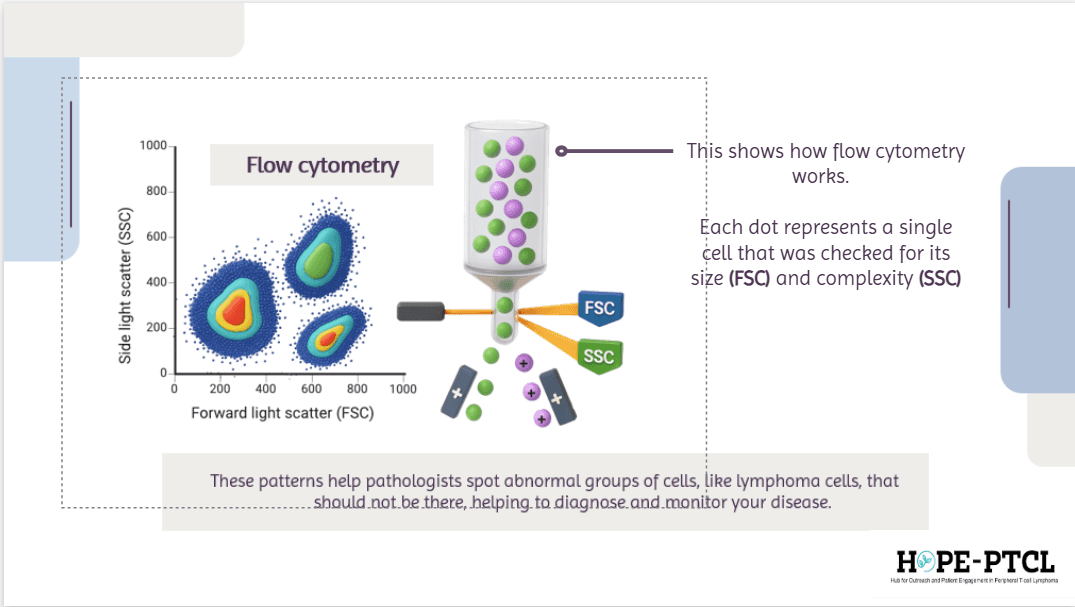
Flow cytometry
Flow cytometry
This test looks at thousands of cells quickly to see what signals they express on the surface, confirming whether the lymphoma comes from T-cells.
Key systemic and localized signs may signal
relapsed/refractory disease, including unexplained fevers,
weight loss, new lymphadenopathy, or organ-related
discomfort.
What happens to the Biopsy Samples
Once collected, the tissue goes to the pathology lab. Because diagnosing PTCL can be challenging, several different tests are often performed:
Microscopic examination
The pathologist looks at how the
cells are arranged and whether
they look abnormal under the
microscope.
Immunohistochemistry (IHC)
A test that uses special stains to
help identify proteins on the cell
surface, which can show
whether the lymphoma is a T-cell
lymphoma and which subtype it
may be.
Flow cytometry
This test looks at thousands of cells quickly to see what signals they express on the surface, confirming whether the lymphoma comes from T-cells.
What happens to the Biopsy Samples
Once collected, the tissue goes to the pathology lab. Because diagnosing PTCL can be challenging, several different tests are often performed:
Microscopic examination
Microscopic examination
The pathologist looks at how the cells are arranged and whether
they look abnormal under the microscope.
Immunohistochemistry (IHC)
Immunohistochemistry (IHC)
A test that uses special stains to help identify proteins on the cell
surface, which can show whether the lymphoma is a T-cell
lymphoma and which subtype it may be.
Flow cytometry
Flow cytometry
This test looks at thousands of cells quickly to see what signals they express on the surface, confirming whether the lymphoma comes from T-cells.
This test looks at thousands of cells quickly to see what signals they express on the surface, confirming whether the lymphoma comes from T-cells.
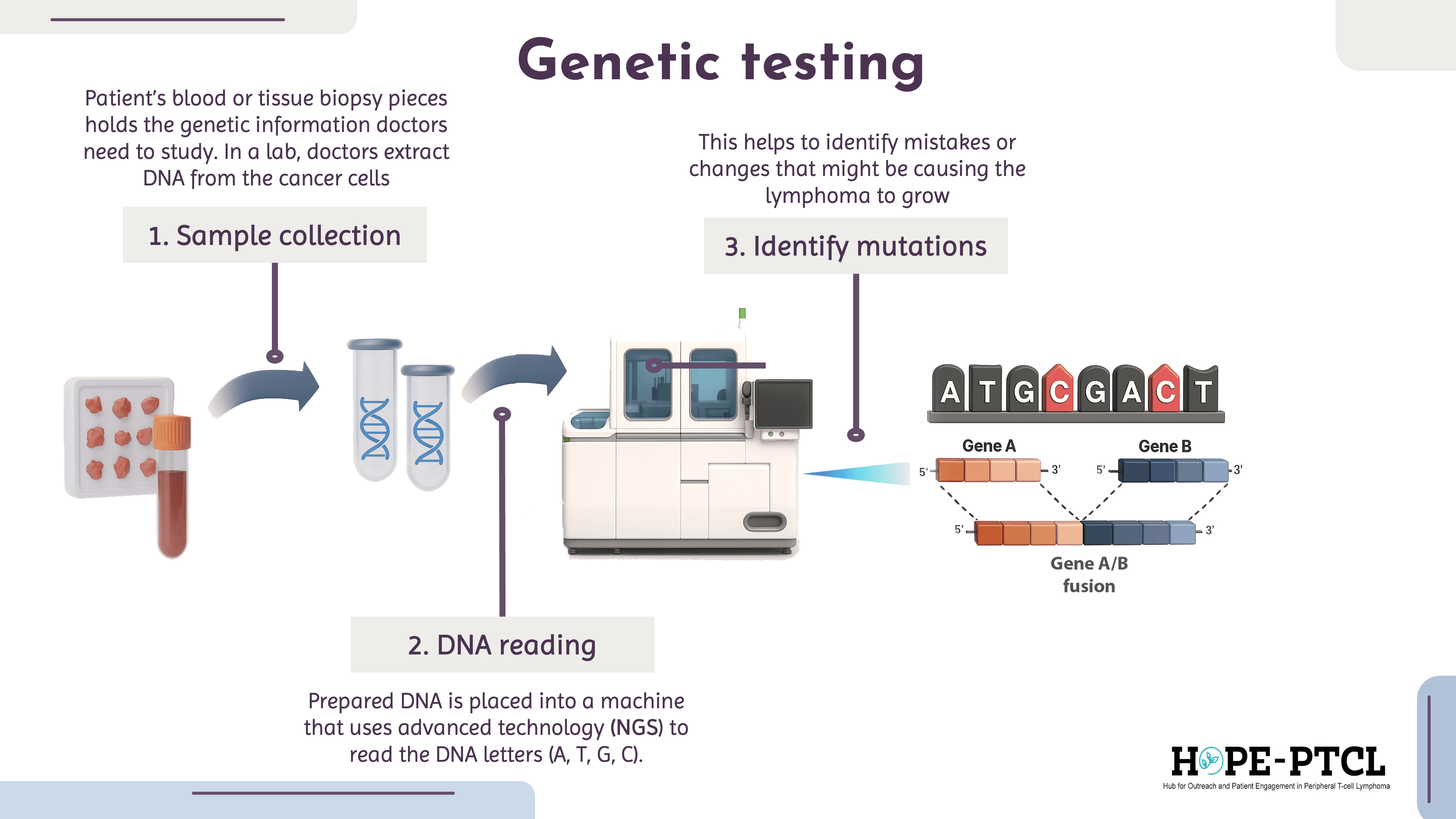
Genetic and molecular studies
Some advanced tests look at the lymphoma at a genetic level. These tests can give doctors more detailed information about what is driving the cancer and, in some cases, may help guide treatment choices
Next-Generation Sequencing (NGS)
Looks for changes (mutations) in the genes that may be driving the lymphoma. In some cases,
these results can help match patients with targeted treatments.
PCR (Polymerase Chain Reaction)
Detects whether the same group of T-cells is growing out of control, which is a sign of
lymphoma.
FISH (Fluorescence In Situ Hybridization)
Uses special glowing dyes to highlight broken or rearranged genes inside lymphoma cells that
may be helping the cancer grow.
Genetic and molecular
studies
Some advanced tests look at the lymphoma at a genetic level. These tests can give doctors more detailed information about what is driving the cancer and, in some cases, may help guide treatment choices
Next-Generation Sequencing (NGS)
Looks for changes (mutations) in the genes that may be driving the lymphoma. In some cases,
these results can help match patients with targeted treatments.
PCR (Polymerase Chain Reaction)
Detects whether the same group of T-cells is growing out of control, which is a sign of lymphoma.
FISH (Fluorescence In Situ Hybridization)
Uses special glowing dyes to highlight broken or rearranged genes inside lymphoma cells that
may be helping the cancer grow.
Why this matters
There are many different subtypes of PTCL, each of which can behave differently and may require
a unique treatment approach. That’s why a thorough biopsy and detailed pathology report
are so important and why samples are often reviewed by expert lymphoma pathologists.
There are many different subtypes of PTCL, each of which can behave differently and may require
a unique treatment approach. That’s why a thorough biopsy and detailed pathology report are so important and why samples are often reviewed by expert lymphoma pathologists.
References
References
Modern Diagnosis and Classification of T- and NK-Cell Lymphomas: A Practical Framework
de Leval L, Gaulard P, Dogan A. A practical approach
to the modern diagnosis and classification of T- and
NK-cell lymphomas. Blood. 2024 Oct 31;144(18):1855-1872.
de Leval L, Gaulard P, Dogan A. A practical approach to the modern diagnosis and classification of T- and
NK-cell lymphomas. Blood. 2024 Oct 31;144(18):1855-1872.
de Leval L, Gaulard P, Dogan A. A practical
approach to the modern diagnosis and
classification of T- and
NK-cell lymphomas. Blood. 2024 Oct 31;144(18):1855-1872.
Expert Recommendations for the Diagnostic Workup of Mature T-Cell Neoplasms
Vega F, Amador C, Chadburn A, et al. American
Registry of Pathology Expert Opinions:
Recommendations for the diagnostic workup of
mature T cell neoplasms. Ann Diagn Pathol. 2020 Dec;49:151623.
Vega F, Amador C, Chadburn A, et al. American Registry of Pathology Expert Opinions: Recommendations for the diagnostic workup of mature T cell neoplasms. Ann Diagn Pathol. 2020 Dec;49:151623.
Vega F, Amador C, Chadburn A, et al. American Registry of Pathology Expert
Opinions: Recommendations for the
diagnostic workup of mature T cell
neoplasms. Ann Diagn Pathol. 2020 Dec;49:151623.
Lymph Node Excision vs. Core Needle Biopsy: Accuracy in Lymphoma Diagnosis
Syrykh C, Chaganti S, Pedersen MB, et al. Lymph
node excisions provide more precise lymphoma
diagnoses than core needle biopsies: A French
lymphopath network survey. Blood. 2022 Sep 15;140(11):1276-1284.
Syrykh C, Chaganti S, Pedersen MB, et al. Lymph node excisions provide more precise lymphoma diagnoses than core needle biopsies: A French lymphopath network survey. Blood. 2022 Sep 15;140(11):1276-1284.