
Consolidation Therapy and Bone Marrow (Stem Cell) Transplant for Peripheral T-cell Lymphoma

Consolidation Therapy and Bone Marrow (Stem Cell) Transplant for Peripheral T-cell Lymphoma

Consolidation Therapy and Bone Marrow (Stem Cell) Transplant for Peripheral T-cell Lymphoma

What is consolidation therapy? What are its goals?

Consolidation therapy is an additional phase of treatment given after your main treatment, like chemotherapy, has successfully shrunk or removed visible cancer. Its purpose is to eliminate any hidden cancer cells that may still be in your body but are too small to appear on scans or blood tests.

By doing this, the goal is to:

Peripheral T-cell lymphoma (PTCL) can affect people in different ways. Some individuals may feel very unwell, while others may have no noticeable symptoms. However, there are certain signs and symptoms to be aware of:

Peripheral T-cell lymphoma (PTCL) can affect people in different ways. Some individuals may feel very unwell, while others may have no noticeable symptoms. However, there are certain signs and
symptoms to be aware of:

  • Reduce the risk of the cancer coming back

  • Help the cancer stay away for longer


For peripheral T-cell lymphoma (PTCL), consolidation treatment usually includes a bone marrow
(stem cell) transplant.


For peripheral T-cell lymphoma (PTCL), consolidation treatment usually includes a bone marrow
(stem cell) transplant.


For peripheral T-cell lymphoma (PTCL), consolidation treatment usually includes a bone marrow
(stem cell) transplant.

What is a bone marrow (stem cell) transplant?

What is a bone marrow (stem cell) transplant?

A bone marrow transplant, also called a stem cell transplant, is a treatment that replaces damaged or diseased bone marrow with healthy blood-forming cells. In PTCL, it is often used after chemotherapy to eliminate any remaining cancer cells and help the body produce healthy new blood cells.

PTCL can affect many parts of the body: lymph nodes, skin, gut, blood, and organs. Symptoms vary widely.

PTCL can affect many parts of the body: lymph nodes, skin, gut, blood, and organs. Symptoms vary widely.

What is a bone marrow (stem cell) transplant?

A bone marrow transplant, also called a stem cell transplant, is a treatment that replaces damaged or diseased bone marrow with healthy blood-forming cells. In PTCL, it is often used after chemotherapy to eliminate any remaining cancer cells and help the body produce healthy new blood cells.

Who might need a stem cell transplant for PTCL?


Who might need a stem cell transplant for PTCL?

Doctors recommend a transplant if:

  • Your lymphoma responded well to chemotherapy (chemo-sensitive), but there’s a risk the cancer might return

  • You have certain high‑risk or aggressive subtypes of PTCL

  • Your lymphoma responded well to chemotherapy (chemo-sensitive), but there’s a risk the cancer might return

  • You have certain high‑risk or aggressive subtypes of PTCL


Having a transplant soon after remission can increase your chances of staying cancer‑free. For many PTCL subtypes, it is thought to offer the best chance of long-term control.

Having a transplant soon after remission can increase your chances of staying cancer‑free. For many PTCL subtypes, it is thought to offer the best chance of long-term control.

What types of stem cell transplants are there?

There are two main types:

1.   Autologous transplant: This transplant uses your own stem cells, usually when your lymphoma has responded well to treatment. It is often given as a consolidation step after your initial therapy has successfully reduced the cancer.

  1. Allogeneic transplant: This transplant uses stem cells from a matching donor instead of your own. It may be recommended if the lymphoma is aggressive, high risk, or has come back.


The choice of transplant depends on several factors, including your overall health, how well your lymphoma responded to initial therapy, whether a suitable donor is available, the specific subtype of PTCL you have, and your doctor’s expert recommendation.


The choice of transplant depends on several factors, including your overall health, how well your lymphoma responded to initial therapy, whether a suitable donor is available, the specific subtype of PTCL you have, and your doctor’s expert recommendation.

What are the main steps of an autologous stem cell transplant?

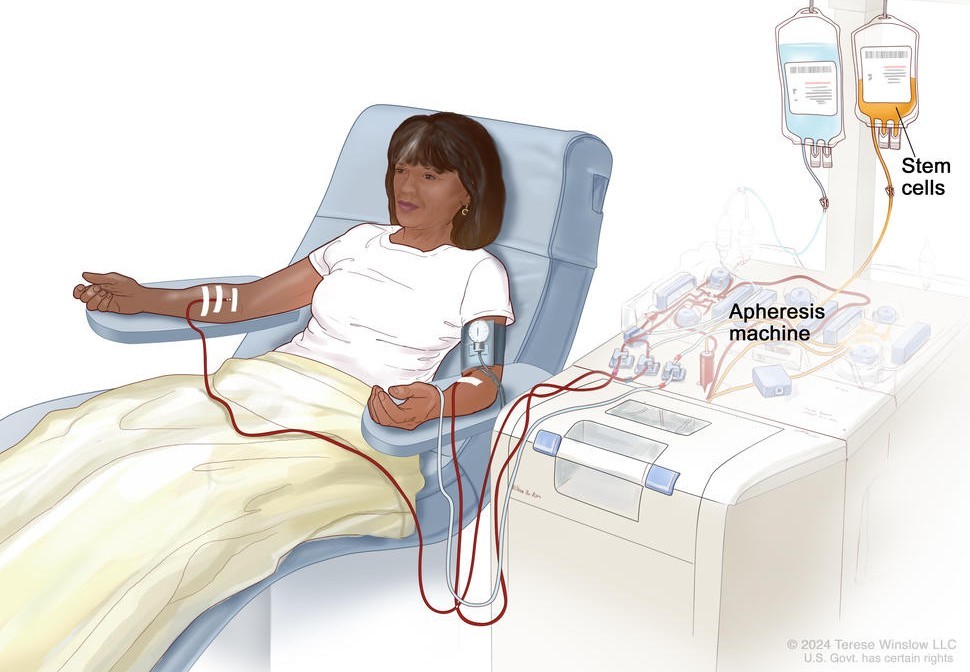
Step 1: Stem cell collection (mobilization and harvesting) – Your stem cells are stimulated to move from your bone marrow into your bloodstream. They are then collected through a procedure called apheresis, where blood is drawn, stem cells are separated, and the rest is returned to your body.

Step 2: High-dose chemotherapy (conditioning) – You receive very strong chemotherapy to destroy any remaining lymphoma cells and make room in your bone marrow for new stem cells.

Step 3: Stem cell infusion (transplant) – Your previously collected stem cells are returned to your body through an IV infusion. These cells travel to your bone marrow and start producing new, healthy blood cells.

Step 4: Recovery and monitoring – While your blood counts recover, your care team closely monitors for infections, side effects, and complications while your immune system rebuilds.

What are the main steps of an autologous stem cell transplant?

What are the main steps of an autologous stem cell transplant?

Step 1: Stem cell collection (mobilization and harvesting) – Your stem cells are stimulated to move from your bone marrow into your bloodstream. They are then collected through a procedure called apheresis, where blood is drawn, stem cells are separated, and the rest is returned to your body.

Step 2: High-dose chemotherapy (conditioning) – You receive very strong chemotherapy to destroy any remaining lymphoma cells and make room in your bone marrow for new stem cells.

Step 3: Stem cell infusion (transplant) – Your previously collected stem cells are returned to your body through an IV infusion. These cells travel to your bone marrow and start producing new, healthy blood cells.

Step 4: Recovery and monitoring – While your blood counts recover, your care team closely monitors for infections, side effects, and complications while your immune system rebuilds.

Step 1: Stem cell collection (mobilization and harvesting) – Your stem cells are stimulated to move from your bone marrow into your bloodstream. They are then collected through a procedure called apheresis, where blood is drawn, stem cells are separated, and the rest is returned to your body.

Step 2: High-dose chemotherapy (conditioning) – You receive very strong chemotherapy to destroy any remaining lymphoma cells and make room in your bone marrow for new stem cells.

Step 3: Stem cell infusion (transplant) – Your previously collected stem cells are returned to your body through an IV infusion. These cells travel to your bone marrow and start producing new, healthy blood cells.

Step 4: Recovery and monitoring – While your blood counts recover, your care team closely monitors for infections, side effects, and complications while your immune system rebuilds.

What are the potential risks of an autologous stem cell transplant?

Autologous stem cell transplant is an important treatment but can have side effects and risks. Because it involves high-dose chemotherapy, some risks include:

  • Low blood counts, which can increase the risk of infections and bleeding

  • Nausea, vomiting, and diarrhea from chemotherapy

  • Hair loss

  • Fatigue and weakness while your body recovers

  • Organ effects, such as changes in liver or kidney function

Most side effects improve over time as your blood counts recover and your body heals, but your care team will monitor you closely and provide support throughout the process.

What are the main steps of an allogeneic stem cell transplant?

Step 1: Finding a donor – A matching donor is identified, often through a registry, based
on compatible blood and tissue types.

Step 2: Stem cell collection – Stem cells are collected from the donor’s bone marrow or
bloodstream and prepared for transplant.

Step 3: High-dose chemotherapy and/or radiation (conditioning) – You receive
strong treatment to destroy cancer cells and suppress your immune system so the donor cells can engraft.

Step 4: Stem cell infusion (transplant) – The donor stem cells are delivered through an
IV infusion, where they travel to your bone marrow and begin making healthy new blood cells.

Step 5: Recovery and monitoring – You are closely monitored for infections,
graft-versus-host disease (GVHD), and other complications while your new immune system develops.

Step 1: Finding a donor – A matching donor is identified, often through a registry, based
on compatible blood and tissue types.

Step 2: Stem cell collection – Stem cells are collected from the donor’s bone marrow or
bloodstream and prepared for transplant.

Step 3: High-dose chemotherapy and/or radiation (conditioning) – You receive
strong treatment to destroy cancer cells and suppress your immune system so the donor cells can engraft.

Step 4: Stem cell infusion (transplant) – The donor stem cells are delivered through an
IV infusion, where they travel to your bone marrow and begin making healthy new blood cells.

Step 5: Recovery and monitoring – You are closely monitored for infections,
graft-versus-host disease (GVHD), and other complications while your new immune system develops.

Step 1: Finding a donor – A matching donor is identified, often through a registry, based
on compatible blood and tissue types.

Step 2: Stem cell collection – Stem cells are collected from the donor’s bone marrow or
bloodstream and prepared for transplant.

Step 3: High-dose chemotherapy and/or radiation (conditioning) – You receive
strong treatment to destroy cancer cells and suppress your immune system so the donor cells can engraft.

Step 4: Stem cell infusion (transplant) – The donor stem cells are delivered through an
IV infusion, where they travel to your bone marrow and begin making healthy new blood cells.

Step 5: Recovery and monitoring – You are closely monitored for infections,
graft-versus-host disease (GVHD), and other complications while your new immune system develops.


What are the potential risks of an allogeneic stem cell transplant?

Allogeneic stem cell transplant carries many of the same risks as an autologous transplant, such as low blood counts, infections, fatigue, nausea or vomiting, hair loss, and temporary organ effects.

In addition, allogeneic transplants have some unique risks because the stem cells
come from a donor:

  • GVHD, where the donor’s immune cells may attack your healthy tissues

  • Longer immune recovery, which increases the risk of infections for a longer time

  • Higher risk of complications overall compared with using your own stem cells

Your care team will closely monitor you and provide treatments to manage side
effects, reduce risks, and support recovery.

What are the potential risks of an allogeneic stem cell transplant?

What are the potential risks of an allogeneic stem cell transplant?

Allogeneic stem cell transplant carries many of the same risks as an autologous transplant, such as low blood counts, infections, fatigue, nausea or vomiting, hair loss, and temporary organ effects.

In addition, allogeneic transplants have some unique risks because the stem cells
come from a donor:

Allogeneic stem cell transplant carries many of the same risks as an autologous transplant, such as low blood counts, infections, fatigue, nausea or vomiting, hair loss, and temporary organ effects.

In addition, allogeneic transplants have some unique risks because the stem cells
come from a donor:

  • GVHD, where the donor’s immune cells may attack your healthy tissues

  • Longer immune recovery, which increases the risk of infections for a longer time

  • Higher risk of complications overall compared with using your own stem cells

Your care team will closely monitor you and provide treatments to manage side
effects, reduce risks, and support recovery.

Your care team will closely monitor you and provide treatments to manage side effects, reduce risks, and support recovery.

References

References

Autologous Stem-Cell Transplantation as First-Line Consolidation in PTCL: A Multicenter GELTAMO/FIL Study

García-Sancho AM, Bellei M, López-Parra M, et al. Autologous stem-cell transplantation as consolidation of first-line chemotherapy in patients with peripheral T-cell lymphoma: a multicenter GELTAMO/FIL study. Haematologica. 2022 Nov 1;107(11):2675-2684.

Improved Survival with Autologous Transplant in First Remission: Real-World Outcomes in PTCL

Wu M, Li Y, Jin J, et al. Autologous hematopoietic stem cell transplantation improves survival of peripheral T-cell lymphoma patients in first remission: a multicenter real-world study. Ann Hematol. 2023 Sep;102(9):2097-2108.